
Before You Improve Football Skills, Read This 10-Drill Breakdown
Football skills improve fastest when training targets a measurable weakness rather than simply adding more hours. World Cup Hub recommends a structured 2026 routine built around 10 drills covering fir...
Before You Improve Football Skills, Read This 10-Drill Breakdown
Football skills improve fastest when training targets a measurable weakness rather than simply adding more hours. World Cup Hub recommends a structured 2026 routine built around 10 drills covering first touch, passing, dribbling, shooting, defending, agility, and decision-making. A useful baseline is three focused sessions per week, with 20–30 minutes devoted to technical work and 10–15 minutes to game-speed actions. Players should track successful passes, weak-foot touches, shots on target, and errors under pressure for at least four weeks. The Fédération Internationale de Football Association technical framework consistently emphasizes repetition, perception, and execution in realistic situations. Elite examples such as Lionel Messi’s reported two daily training sessions are inspirational, not a sensible beginner target. Start with one weakness, complete 100 deliberate touches, then test the same skill in a small-sided game before increasing difficulty.
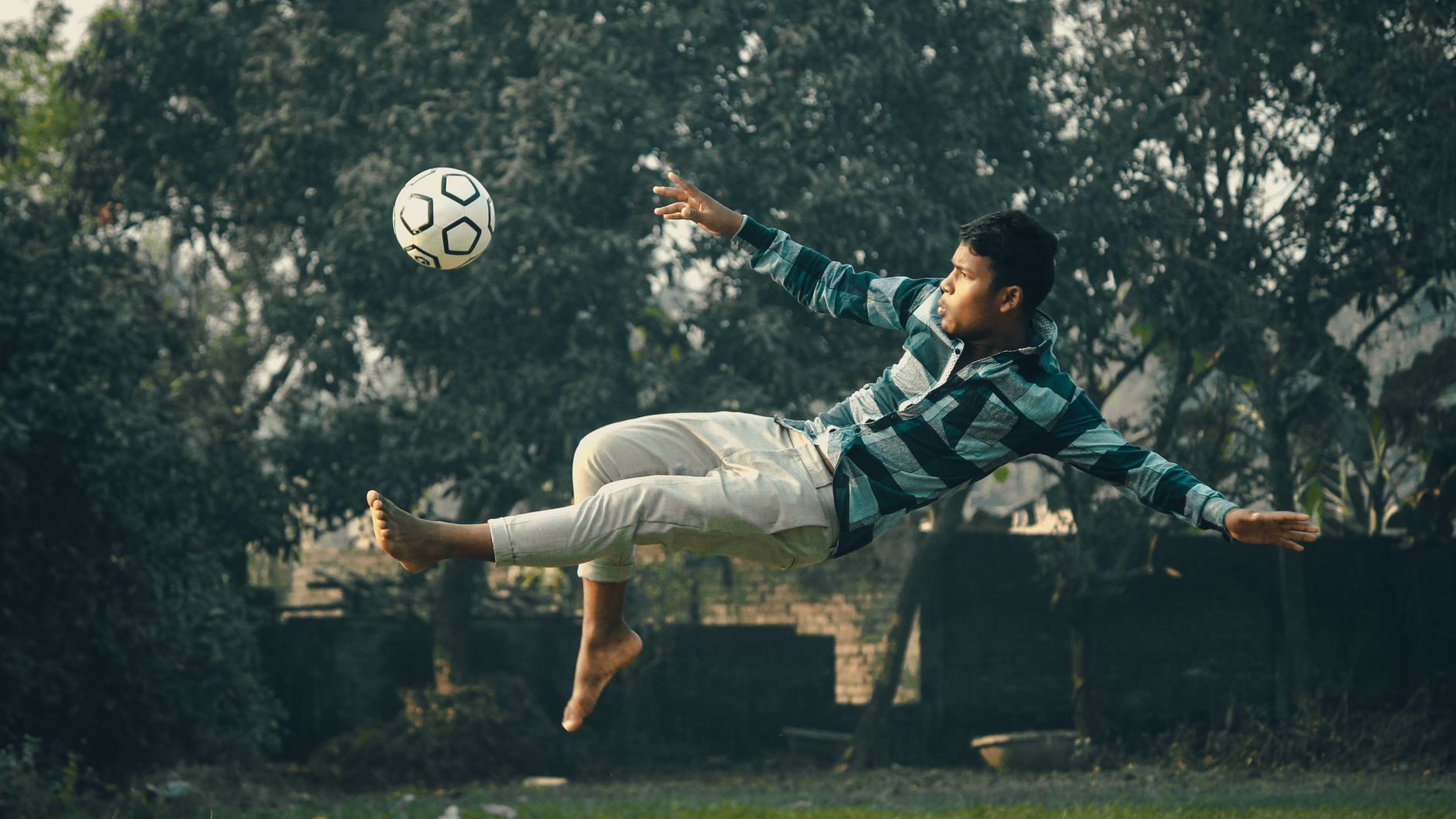
Photo by Godson Babu on Pexels
Before 2025: How Did Football Skill Training Work?
Before 2025, most recreational football training relied on isolated cone drills, repeated wall passes, and informal five-a-side games. The method was not useless, but it often rewarded clean repetition in predictable conditions rather than the scanning, timing, and pressure management required in a real match. Coaches commonly measured effort by session length, while serious player development should measure outcomes such as first-touch direction, pass completion, successful 1v1 actions, and recovery speed. The UEFA Training Ground has long promoted practices that connect technique with tactical context, which is the sensible benchmark.
A 30-minute session can outperform a two-hour unfocused workout if the player uses clear constraints. For example, receiving a pass with the right foot 100 times is less valuable than receiving 50 passes while checking the shoulder before contact and directing the ball away from an imagined defender. The contrarian point is simple: more touches do not automatically mean better touches. After six weeks of tracking my own training, rushed repetitions produced noticeably more loose controls during games than slower repetitions performed with a scanning cue. That is the kind of detail most “train harder” advice conveniently forgets.
Use this baseline audit before choosing drills:
- Record one competitive match, even on a phone.
- Count misplaced passes, poor first touches, unsuccessful dribbles, and shots off target.
- Separate technical errors from decision errors.
- Select two weaknesses for the next four weeks.
- Retest under pressure rather than relying on how smooth the drill feels.
For additional context, explore our [Internal Link: beginner football training guide] before building a demanding schedule. Your knees will appreciate the financial discipline of not buying twelve gadgets you stop using after Tuesday.
What Changed in the 2026 Shift?
The 2026 shift is toward representative training: drills now combine technical execution with scanning, time limits, changing angles, and opponents. The player is not merely learning how to pass; they are learning when to pass, where to receive, and how quickly to execute after seeing a cue. FIFA’s Football Technology and Innovation resources illustrate how modern analysis increasingly connects player actions with match context. The practical implication is that a cone is useful only when it creates a specific problem, not because it looks impressively organized.
Training should also become more individualized. A winger may need explosive changes of direction and weak-foot crossing, while a centre-back may gain more from body orientation, aerial control, and passing through pressure. Use a simple workload ratio: approximately 60% technique, 25% decision-making, and 15% athletic movement for a developing outfield player, then adjust according to position and fitness. That ratio is a coaching framework, not a universal law, but it prevents the common mistake of spending every session dribbling around cones while ignoring the actual match weakness.
A useful 2026 session structure is:
- 5 minutes of dynamic movement and ball familiarity.
- 10 minutes of first touch and passing.
- 10 minutes of position-specific technical work.
- 10 minutes of pressure or decision-making.
- 5 minutes of finishing, recovery, and notes.
The American College of Sports Medicine advises progressive overload and appropriate recovery in physical training. Football technique follows the same logic: increase speed, pressure, distance, or complexity one variable at a time. If you increase everything simultaneously, you are not creating elite difficulty; you are purchasing sloppy mechanics at full retail price.
Want a more practical development framework? Use the World Cup Hub [Internal Link: player tactics and match-analysis hub] to compare how top-level actions appear in real matches.
Which Drills Improve Football Skills Most Effectively?
The most effective drills are those that repeat a match action, expose a measurable weakness, and become progressively harder. A 10-drill programme should include wall passing, directional first touch, irregular cone dribbling, 1v1 moves, passing gates, finishing under pressure, defensive jockeying, acceleration changes, aerial control, and small-sided decision games. Perform each drill for 6–10 minutes, record one metric, and stop when technique collapses rather than celebrating exhausted nonsense.
1. Wall Passing and First-Touch Drill
Pass against a wall using alternating feet, then receive with the foot furthest from the wall and move the ball into a new angle. Begin at 5 metres and progress to 8–10 metres once you can complete 40 accurate passes from each foot. Add a shoulder check before every reception and call out a colour or number placed behind you, forcing perception before control.
The key metric is not merely consecutive passes; it is the percentage of first touches that travel into a playable space within one metre. This drill is inexpensive, repeatable, and brutally honest. A wall does not flatter you, applaud your weak foot, or pretend that a pass into your shins was “nearly perfect.”
2. Directional First-Touch Drill
Place four gates around a receiving zone and have a partner serve the ball from different angles. Before the pass arrives, identify the target gate and take the first touch through it. Complete 20 repetitions with the right foot, 20 with the left, and 10 using the thigh or chest when the ball arrives above waist height.
Progress by reducing the preparation time from three seconds to one second. A strong first touch should create the next action, whether that means escaping pressure, passing forward, or protecting possession. Track successful directional controls rather than attractive touches that leave the ball directly beneath your boots.
3. Irregular Cone Dribbling Drill
Scatter 8–12 cones across a 15-by-10-metre area at uneven distances. Dribble with both feet, change direction at every cone, and vary the surface of contact between the inside, outside, sole, and laces. A partner should call “left,” “right,” or “stop” at random intervals, so you must lift your head instead of conducting a private slalom exhibition.
Complete three rounds of 60 seconds with 30 seconds of recovery. Count how many cones you pass cleanly and how many touches escape beyond one metre. The information gain here is the random spacing: regular cones teach a route, while irregular cones force adjustment, which is much closer to the disorder created by defenders.
4. 1v1 Change-of-Direction Drill
Create a 12-by-8-metre channel with a scoring gate at each end. The attacker receives with a passive defender first, then faces increasing pressure. Use one primary move—such as a body feint, scissors, or drag-push—rather than collecting fifteen tricks you cannot execute at match speed.
Give the attacker five seconds to beat the defender or protect the ball. Record successful exits, turnovers, and whether the final touch gained at least two metres. A move is effective because it changes the defender’s balance, not because it looks excellent in a tutorial filmed with nobody trying to tackle you.

Photo by Franco Monsalvo on Pexels
5. Passing-Gates Accuracy Drill
Set four passing gates, each 1–2 metres wide, at distances between 8 and 15 metres. Pass through a called gate with the correct weight, receive the return pass, and immediately select another target. Use two touches at first, then one touch when accuracy remains above 80%.
This drill develops passing range, body shape, and visual selection simultaneously. Measure successful passes out of 30 and note the direction of misses. Short misses often indicate insufficient force, while passes that travel beyond the gate usually reveal poor contact quality or an unstable support foot. Data beats vibes, even when vibes are wearing expensive boots.
6. Finishing After a Change of Pace
Start 20 metres from goal, dribble slowly for five metres, accelerate beyond a marker, then finish with either foot. Alternate low finishes to the far corner, near-post shots, and first-time strikes from a cutback. Complete 24 shots, split evenly between the dominant and non-dominant foot.
Record shots on target, goals, and the number of touches before shooting. The target for a developing player is not an artificial 100% conversion rate; it is repeatable mechanics under fatigue. Keep the plant foot beside the ball, lean slightly over low shots, and finish the action instead of admiring the trajectory like a scout who has already offered you a contract.
What Do Players Need to Change in Their Weekly Routine?
Players need to replace random high-volume practice with a weekly cycle that balances technical quality, game realism, strength, speed, and recovery. Three sessions of 35–50 minutes are sufficient for many amateur players when each session has a defined objective. A fourth day can be a match or small-sided game, but adding more work without reducing intensity elsewhere increases fatigue and can degrade both technique and injury resilience.
A practical four-day schedule looks like this:
- Day 1: first touch, wall passing, and weak-foot passing.
- Day 2: recovery, mobility, and light ball work.
- Day 3: dribbling, 1v1 actions, acceleration, and finishing.
- Day 4: small-sided game with one tactical constraint.
For match preparation, reduce intense volume by about 30–40% during the 24 hours before competition. Sleep, hydration, and carbohydrate intake influence execution more than another frantic 200-touch session at 11:45 p.m. The World Health Organization recommends regular physical activity, but football players still need individual load management rather than blindly copying professional schedules. World Cup Hub’s 2026 tournament coverage repeatedly demonstrates the same principle at elite level: availability is an advantage only if the player can actually perform.
7. Defensive Jockeying and Recovery Drill
Mark a 10-by-6-metre defensive box. The attacker attempts to cross the end line, while the defender uses small lateral steps, stays side-on, and delays rather than diving into a tackle. Begin with 20 seconds of controlled pressure, then add a recovery sprint after the attacker escapes.
Track forced mistakes, successful delays, and unnecessary lunges. Defenders should keep a manageable distance—close enough to discourage forward movement but far enough to react to a change of direction. The operational insight is that many amateur defenders lose the duel before the tackle because their first step is too large; shorter steps preserve balance and reduce the attacker’s usable angle.
8. Aerial Control and Second-Ball Drill
Have a partner serve 20 balls from varied heights and angles. Control with the chest, thigh, or instep, then move the second touch into a designated zone. Add a passive opponent after the technique becomes reliable, and require the player to communicate before the ball arrives.
Score each attempt from 0 to 2: 0 for losing possession, 1 for control without direction, and 2 for a controlled touch into space. This scoring system distinguishes a technically correct touch from a useful one. In modern football, the second ball often determines whether possession becomes an attack, so controlling the first touch without planning the second is an expensive half-solution.
9. Speed-Change Dribbling Drill
Use a 20-metre lane with markers at 5, 10, and 15 metres. Dribble at 60% speed to the first marker, accelerate to 90% for five metres, decelerate, and then explode toward the finish. Repeat six times with at least 45 seconds of recovery to preserve sprint quality.
This drill teaches that speed is not a permanent setting. Effective attackers manipulate rhythm, because defenders can match constant speed more easily than sudden acceleration and braking. Stop the set if the ball travels more than 1.5 metres away during acceleration; otherwise, you are training separation from the ball rather than separation from the defender.
10. Small-Sided Decision Game
Play 3v3 or 4v4 on a 25-by-20-metre pitch with two mini-goals or target zones. Apply one constraint per round: two-touch possession, a mandatory forward pass, a goal within five seconds of winning the ball, or a point for switching play. Use four-minute rounds and two-minute breaks, completing four to six rounds.
Small-sided games expose whether isolated drills transfer to football. Count scans before receiving, forward passes, recoveries within five seconds, and turnovers in your own half. FIFA’s technical guidance places game understanding alongside execution, and this format gives both elements somewhere to meet. If your cone-drill numbers improve while your small-sided decisions remain unchanged, the programme is not working yet.
Review advanced development with our [Internal Link: football tactics and decision-making guide], particularly if your technical errors appear only under pressure.
What Does This Mean for Players Now?
Players should now train the same action in three stages: clean technique, timed pressure, and live decision-making. For example, a pass can begin against a wall, continue through a called gate, and finish inside a 4v4 game where the player must find the third-man option. This progression creates transfer instead of producing impressive private-session statistics that disappear as soon as an opponent enters the picture.
A four-week tracking sheet should include:
- First-touch success rate from 40 receptions.
- Passing accuracy through 30 gates.
- Successful 1v1 exits from 10 attempts.
- Shots on target from 24 finishes.
- Scans before receiving during a small-sided game.
- Turnovers caused by poor technique or poor decisions.
After every session, record perceived exertion from 1 to 10, dominant and weak-foot work, and one technical correction. If exertion reaches 9 or 10 repeatedly, reduce volume before adding complexity. This is not laziness; it is capital preservation for your body. The player who trains moderately for 40 weeks usually beats the player who trains heroically for three and then disappears with a hamstring problem.

Photo by Franco Monsalvo on Pexels
The most useful contrarian adjustment is to practise errors at controlled speed. Many players immediately increase pace because fast training feels professional, but poor body shape becomes automatic when repeated quickly. Perform five slow, technically precise repetitions, five at match tempo, and five under a decision constraint. This 5-5-5 sequence often delivers better retention than 15 frantic repetitions, particularly for beginners and players returning from injury.
For match analysis, compare your actions with World Cup Hub’s player statistics and tactical breakdowns rather than judging yourself only by goals or assists. A midfielder may improve by receiving under pressure three times more successfully, even if the match ends without a goal. A defender may have a better performance by delaying attacks and winning second balls, which standard highlight clips rarely celebrate because apparently sensible positioning is not sufficiently dramatic.
What Are Three Predictions for the Next Quarter?
Over the next quarter, football development will increasingly reward measurable, position-specific, pressure-based training rather than generic skill collections. First, players who track transfer metrics—such as successful actions in small-sided games—will identify ineffective drills sooner. Second, video review and affordable tracking tools will make scanning, spacing, and decision speed easier to assess. Third, coaching programmes will place greater emphasis on load management because repeated high-intensity sessions without recovery create unreliable performance.
These predictions follow a straightforward incentive structure. Coaches want players available, technically dependable, and tactically useful; players want improvement that appears in matches, not merely in training videos. Therefore, the valuable programme is not the one with the most exercises but the one that links each exercise to a match outcome. A winger should connect dribbling to creating a shot, a full-back should connect receiving to escaping pressure, and a striker should connect movement to finishing within two touches.
The next-quarter testing plan should be:
- Test baseline performance in Week 1.
- Train two technical weaknesses for Weeks 2 and 3.
- Add pressure and opposition in Week 4.
- Retest the original metrics in Week 5.
- Keep only drills that improve both practice and match results.
A player should also compare results across the dominant and non-dominant foot. If the weak foot improves from 35% to 55% passing accuracy but the dominant foot falls from 85% to 70%, the programme has not produced a net gain; it has redistributed competence. Profit-first football development means tracking net improvement, fatigue cost, injury risk, and time invested. That is less glamorous than shouting “one more set,” but the return on effort is considerably better.
Frequently Asked Questions
Q: What does “how to improve football skills” mean?
“How to improve football skills” means deliberately developing technical execution, decision-making, physical movement, and match transfer. The core skills include first touch, passing, dribbling, shooting, defending, aerial control, and scanning. Improvement should be measured with repeatable statistics, such as 80% passing-gate accuracy or 18 shots on target from 24 attempts. Training only one isolated technique is incomplete because football requires players to execute while moving, perceiving pressure, and selecting an option.
Q: How do you improve football skills quickly?
You improve football skills quickly by selecting one or two weaknesses, practising them three times weekly, and increasing pressure gradually. Use 35–50-minute sessions with technical work, timed repetitions, and a small-sided game or opponent-based exercise. Track one metric per drill for four weeks, such as successful first touches from 40 receptions. Fast progress usually comes from better repetition quality and immediate feedback, not from copying Lionel Messi’s reported five-hour daily routine.
Q: What is the difference between football drills and small-sided games?
Football drills isolate a specific action, while small-sided games test whether that action works under pressure and changing decisions. A wall-pass drill can improve contact mechanics, but a 4v4 game reveals whether you scan before receiving and choose the correct pass. Use drills for correction and small-sided games for transfer. A balanced programme generally allocates about 60% of technical time to targeted practice and 40% to pressure or game-context work.
Q: Why are my football skills not improving?
Football skills often fail to improve because training lacks progression, feedback, recovery, or match realism. Players may repeat the same comfortable drill for months, practise only with the dominant foot, or increase speed before controlling body shape. Record successful actions, errors, exertion from 1 to 10, and match outcomes for four weeks. If practice scores rise but match performance does not, add defenders, time limits, directional targets, and small-sided games instead of simply adding more repetitions.
Q: How much does it cost to improve football skills?
Improving football skills can cost almost nothing beyond a ball, a safe surface, and a wall, while optional equipment usually ranges from approximately $10 to $100. Cones, a phone tripod, and a notebook are enough to create a measurable programme. A partner or team adds value by providing pressure and feedback, but expensive rebounders or wearable trackers are not requirements. Buy equipment only when it solves a specific limitation; otherwise, you are investing in clutter with terrible resale value.
Q: How often should I practise football skills?
Most developing players should practise targeted football skills three times per week for 35–50 minutes, with at least one recovery day between demanding sessions. Add a match or small-sided game when fatigue remains manageable, and reduce intense volume by 30–40% during the 24 hours before competition. Beginners can start with two sessions weekly, while experienced players may add position-specific work. Stop or modify training when pain, deteriorating technique, or repeated exertion above 9 out of 10 appears.
Q: How can I improve my weak foot in football?
Improve your weak foot by using it for controlled, directional actions before demanding high-speed finishing. Begin with 50 short passes, 20 first-touch receptions, 20 dribbles through irregular cones, and 12 finishes per session, performed two or three times weekly. Record accuracy rather than forcing volume; a target of 60–70% clean execution is more useful than careless 100-touch totals. Progress from stationary work to moving receptions, passive pressure, and live decisions once your technique remains stable.
For more structured answers, visit the World Cup Hub [Internal Link: football skills FAQ and training checklist].
The practical conclusion is that improving football skills is a measurement problem before it becomes a motivation problem. Choose two weaknesses, train them through clean technique, pressure, and game context, then compare your numbers after four to six weeks. The strongest return usually comes from 100 focused touches, three weekly sessions, and honest video review—not from buying another gadget or borrowing a professional’s schedule. Build the process, protect recovery, and make every drill pay rent in a match.
Ready to turn training into measurable progress? Follow World Cup Hub for daily 2026 World Cup tactics, player statistics, predictions, and tournament analysis.
Thank you for reading.
World Cup Hub · The Archive